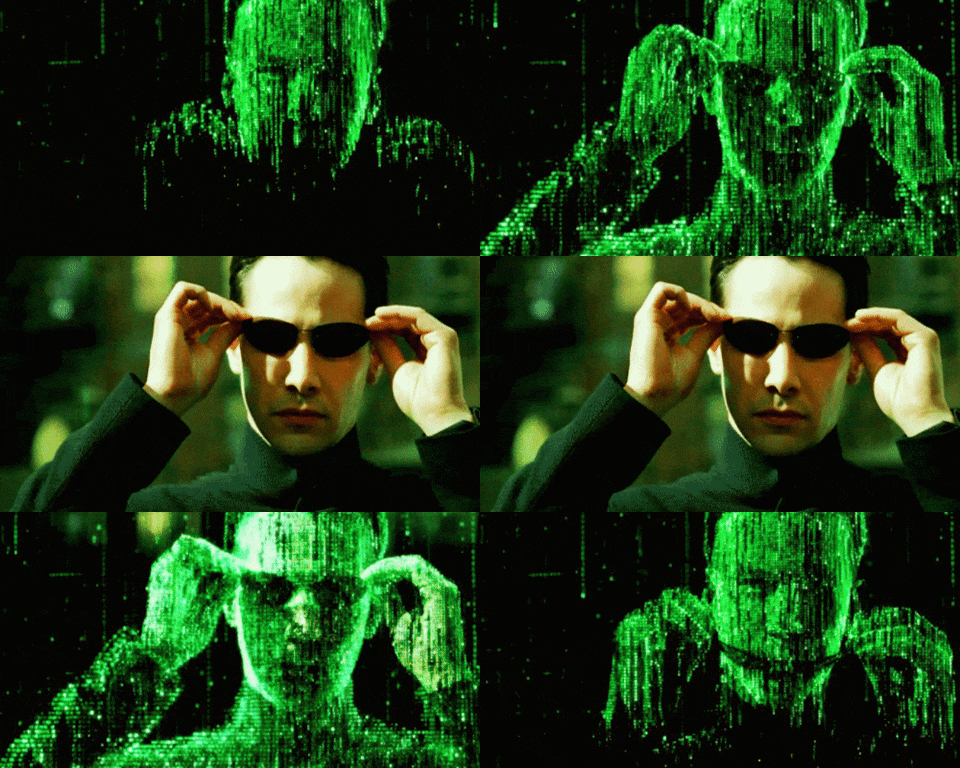
The Matrix, released in 1999, was more than just a groundbreaking science fiction film; it had an immense impact on technology. Directed by the Wachowskis and starring Keanu Reeves as Neo, this movie introduced us to a world where reality is actually a simulated reality created by sentient machines to subdue humanity. The Matrix's influence can be seen in various aspects of our lives today.
Firstly, it sparked interest in virtual reality (VR) technology. While VR was not new at the time, The Matrix brought attention to its potential and paved the way for advancements like Oculus Rift, HTC Vive, and PlayStation VR. These devices allow users to experience immersive environments that were once only possible in movies like The Matrix.
Secondly, the film inspired discussions about artificial intelligence (AI) and its implications on society. In the movie, AI takes over Earth by creating a simulated reality for humans. This concept has led many researchers and scientists to explore ethical questions surrounding AI development and use. It also prompted companies like Google and Facebook to invest heavily in AI research, resulting in breakthroughs such as self-driving cars and chatbots that can understand natural language.
Lastly, The Matrix influenced the world of cybersecurity. With hacking being a central theme throughout the film, it sparked interest in computer security measures. Today, we see this impact with increased emphasis on protecting digital information through encryption methods and multi-factor authentication systems.
In conclusion, while The Matrix may have been just another movie for some, its influence on technology cannot be denied. It has shaped our understanding of virtual reality, artificial intelligence, and cybersecurity, pushing these fields forward in ways we could never imagine before watching Neo take down Agent Smith.