**
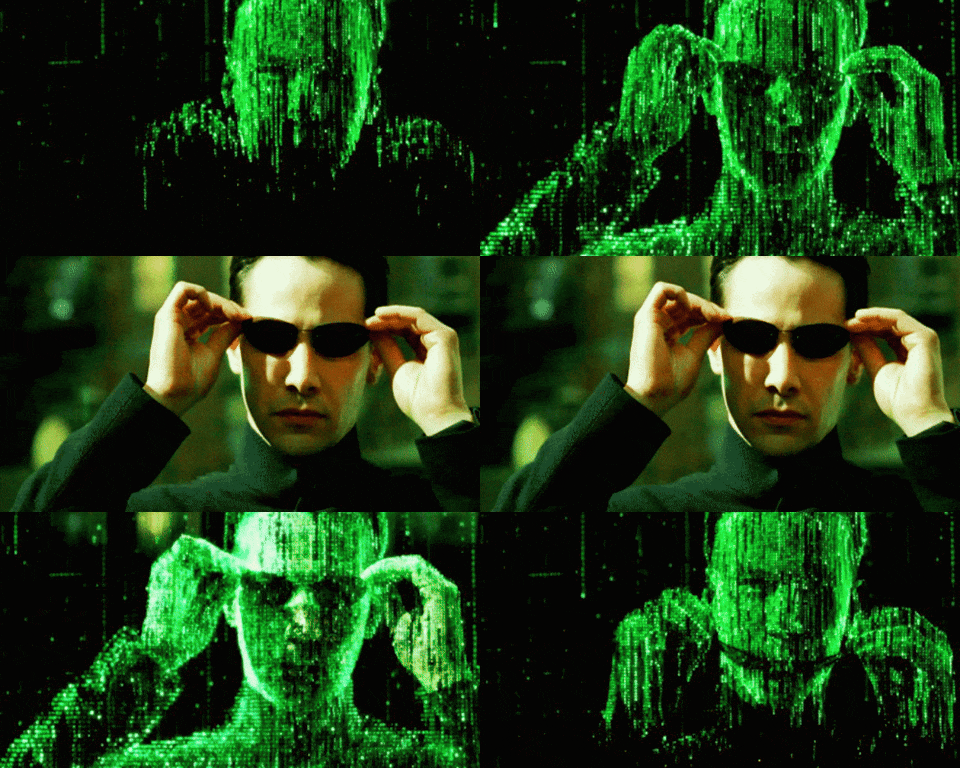
In the realm of science fiction, few films have left as lasting an impression as "The Matrix" trilogy. Released between 1999 and 2003, this groundbreaking series not only captivated audiences with its visually stunning action sequences but also sparked intriguing discussions about technology's role in our lives.
Fast forward to the present day, it is fascinating to observe how many of the film's predictions have come true or are becoming increasingly relevant. The concept of a virtual reality (VR) world where humans live while their bodies slumber in pods has been replaced by more practical applications such as VR gaming and training simulations. However, the idea that our digital footprints could be used to control us is no longer just science fiction; concerns about data privacy and cybersecurity have never been greater.
Moreover, "The Matrix" can also be seen as a commentary on humanity's relationship with technology. The film poses thought-provoking questions: Are we becoming too reliant on machines? Could artificial intelligence (AI) surpass human intelligence one day? As AI continues to advance at an unprecedented pace, these queries take on new significance. While there is no denying that technology has brought numerous benefits—from improving healthcare outcomes through medical robots to revolutionizing communication with smartphones—it also presents challenges that society must address head-on.
In conclusion, "The Matrix" trilogy serves as a reminder of the profound impact science fiction can have on shaping our understanding and expectations of technology. As we move forward into an increasingly digital world, it is essential to engage in open dialogue about how best to harness these advancements while minimizing potential risks. Just like Neo had to choose between believing in the Matrix or embracing reality, so too must we decide whether to blindly accept technological progress or actively participate in shaping its course.