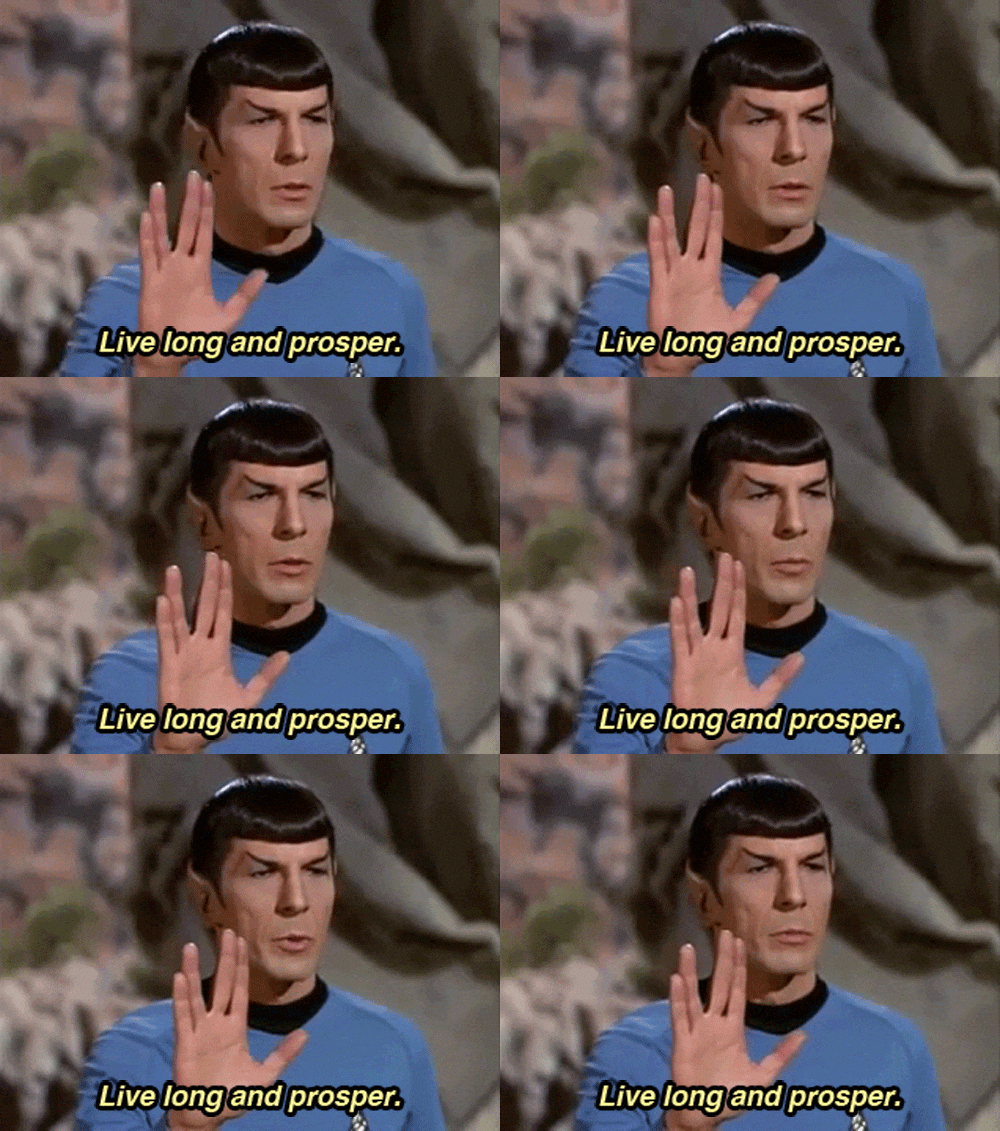
Star Trek, as an iconic science fiction franchise, has always been known to push the boundaries of what is possible both within its universe and our own. One aspect that sets it apart from other franchises is how deeply it delves into social issues and implications. From its inception with Star Trek: The Original Series (TOS) in 1966, through various spin-offs like Deep Space Nine, Voyager, and Enterprise, to the recent rebooted movies featuring Chris Pine as Captain Kirk - each iteration of this beloved series has tackled complex social themes.
The show's creator Gene Roddenberry envisioned a future where humanity had evolved past its current societal struggles. This is evident in how he portrayed different alien species coexisting peacefully on the USS Enterprise, challenging viewers to question their own prejudices and biases. In fact, many episodes of Star Trek dealt with issues like racism, sexism, warfare, and environmental degradation - all wrapped up in a futuristic setting that made them more palatable for audiences at the time.
Moreover, Star Trek also explored themes related to gender equality, sexuality, and disability rights long before they became mainstream conversations. Characters like Lieutenant Uhura (played by Nichelle Nichols), who held a high-ranking position despite being an African American woman in the 1960s, paved the way for representation on television. Similarly, characters with disabilities were portrayed as integral members of the crew rather than objects of pity or fear.
In conclusion, Star Trek has consistently used its platform to address pressing social issues and spark conversations about equality, diversity, and inclusion. Its enduring popularity serves as a testament to how relevant these themes remain today - proving that science fiction can indeed mirror reality while also shaping it for the better.