
Improving Real Estate Lead Response Operations in Chicago
Chicago real estate brokerages are constantly striving to manage the influx of client inquiries efficiently. The quality of initial intake, the speed and accuracy of routing these inquiries, and the consistency of follow-up are crucial fact
Chicago real estate brokerages are constantly striving to manage the influx of client inquiries efficiently. The quality of initial intake, the speed and accuracy of routing these inquiries, and the consistency of follow-up are crucial factors that can significantly impact client satisfaction and the success of transactions. Ensuring these processes are optimized is not just about saving time; it’s about maintaining a professional reputation and driving business growth.
Operational Challenges in Chicago Real Estate
Managing client inquiries efficiently presents several operational challenges for real estate brokerages. Maintaining high standards of service while dealing with fluctuating workloads is particularly difficult. Inconsistent response times can lead to missed opportunities and dissatisfied clients. Furthermore, tracking the status of inquiries and ensuring timely and thorough follow-ups can be overwhelming for agents and support staff. These issues can undermine the efficiency of the entire brokerage operation.
Real Estate Workflow Automation with AI
Integrating artificial intelligence (AI) into real estate workflows can help address these challenges without sacrificing the essential human touch. AI can streamline the intake process by automatically categorizing and prioritizing inquiries based on specific criteria, such as urgency or client type. This ensures that the most critical inquiries are handled first, allowing agents to focus on high-value tasks.
For example, an AI system could automatically route inquiries to the most appropriate agent based on their expertise and current workload. This ensures clients are matched with the best-suited professional from the outset, enhancing the quality of service. Additionally, AI can track the progress of each inquiry, providing real-time visibility into response times and follow-up actions. This transparency helps managers and agents stay accountable and responsive.
Human Review and Implementation Discipline
While AI can significantly enhance the efficiency of real estate workflows, it is crucial to maintain a human review process to ensure the quality of service is not compromised. Agents should periodically review AI-generated actions to ensure they align with the brokerage’s standards and client needs. This dual approach—combining AI automation with human oversight—helps maintain a balance between efficiency and quality.
Implementing AI in real estate workflows requires discipline and a clear understanding of its limitations. For instance, AI is adept at processing data and identifying patterns, but it cannot replace the nuanced judgment of a seasoned real estate professional. Therefore, it is essential to train staff on how to effectively use AI tools and integrate their insights into day-to-day operations.
Conclusion
By leveraging AI-supported real estate workflow automation, Chicago brokerages can improve the quality of client intake, streamline routing processes, and enhance follow-up consistency without compromising the personal touch that clients value. This approach not only enhances operational efficiency but also supports the professional judgment of agents, leading to better client satisfaction and business outcomes.
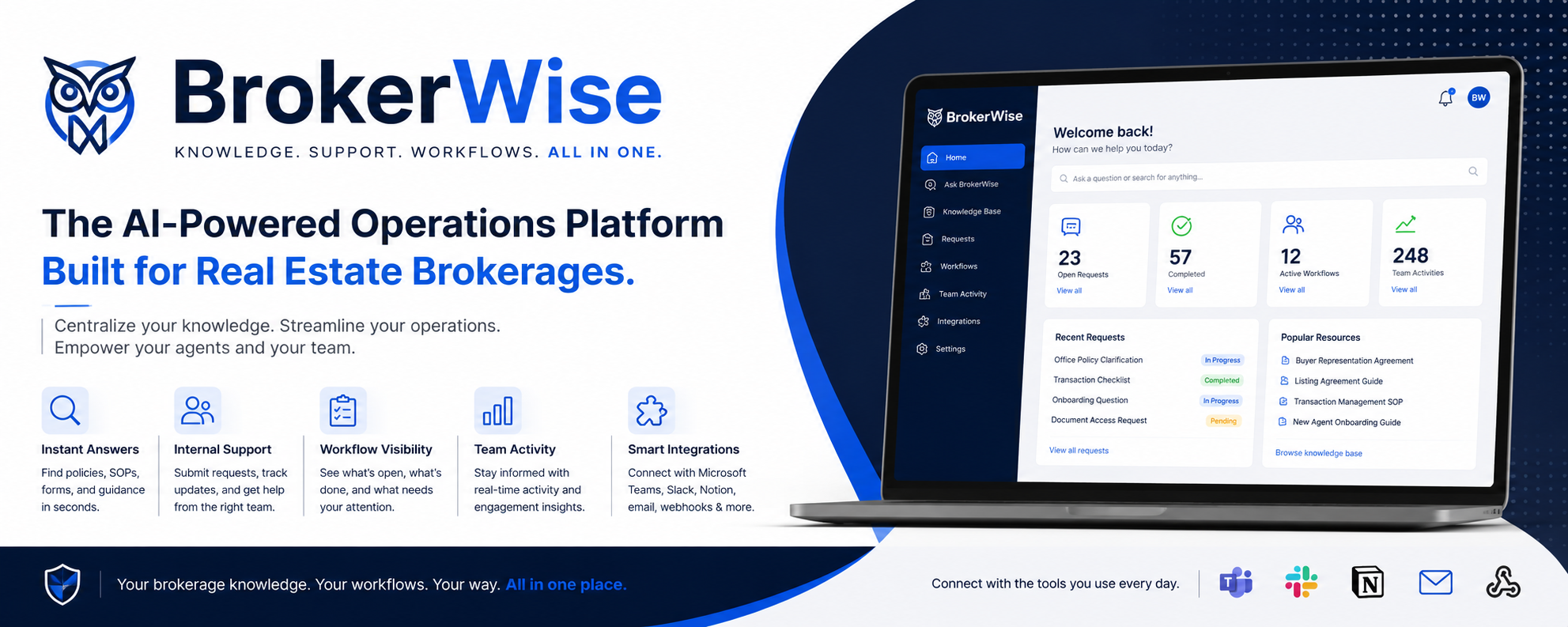
BrokerWise Real Estate AI Workspace
BrokerWise helps real estate teams manage AI requests, documents, lead routing, and brokerage workflows from one workspace.
Schedule a BrokerWise Demo | Read BrokerWise Docs
Original source: http://192.168.0.190/blog/?p=853
Turn real estate knowledge into working intelligence.
BrokerWise centralizes brokerage knowledge, internal support, workflows and team activity in one AI-powered operations platform.